Updated 6 November 2026, 07:30 GMT. IREN closed Thursday 5 November at $18.03, down 16.95 percent from $21.71 (MarketScreener), after Bloomberg reported that Microsoft has tightened oversight of neocloud data center projects at Nebius, IREN and Nscale. After the close, IREN reported fiscal first-quarter revenue of $228 million, up 66 percent from the prior quarter and above the $221 million analyst average (company release; LSEG via CNBC). Shares then rose in extended trading to between $19.42 (Seeking Alpha) and $19.76 (Investing.com). Verdict: the quarter beat, but the more than $4 billion annual revenue run-rate target slipped from year-end to January, possibly February. Reference levels: $15 below, $21.71 above.
Key facts
- Close: $18.03 on Thursday, down 16.95 percent (MarketScreener). Reuters put the decline at about 17 percent.
- After hours: up about 7.7-9.6 percent, at $19.42 (Seeking Alpha) to $19.76 (Investing.com), depending on the snapshot.
- Revenue: $228 million in the quarter to 30 September, from $137 million in the June quarter (IREN release). The LSEG consensus was $221 million (CNBC).
- AI Cloud: revenue up 182 percent sequentially to $200 million ($135 million services, $65 million lease), with an 86 percent segment gross margin. Bitcoin mining brought in $28 million, down from $67 million (IREN release).
- Profit: net loss of $263 million, narrower than $684 million in the June quarter; adjusted EBITDA of $66 million, up from $19 million (IREN release).
- Backlog: up 22 percent to $20.3 billion, with about two-thirds from investment-grade counterparties (IREN release).
- Target delay: the more than $4 billion ARR target, previously for year-end 2026, is now targeted for January 2027 “following a customer-requested change and supplier timing”, and may extend to February (IREN release).
What the results said
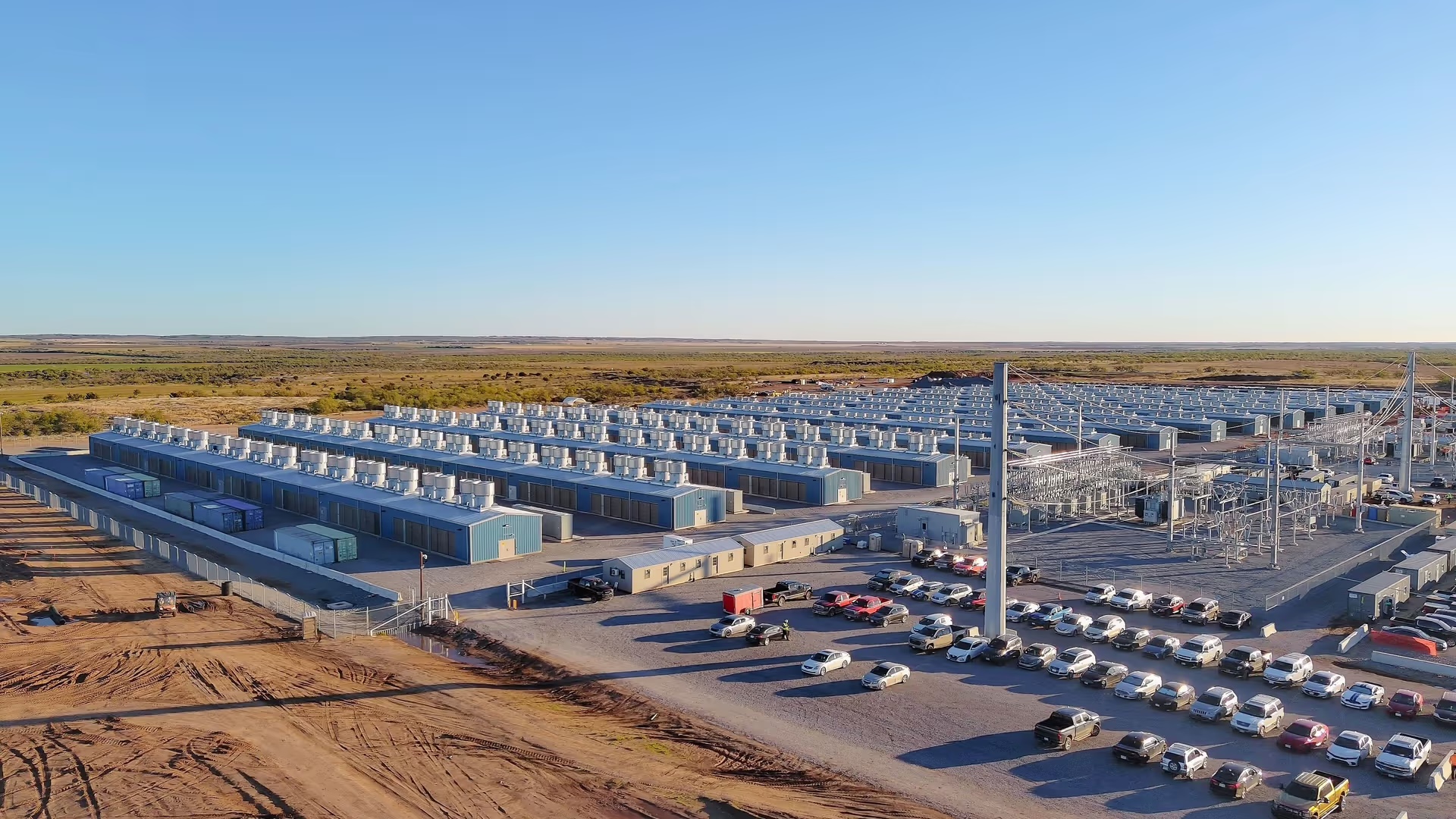
The numbers were strong on their own terms. AI Cloud is now almost 90 percent of revenue, operating ARR doubled to about $1 billion according to co-CEO Daniel Roberts, and IREN said the first of its Horizon buildings has been delivered to Microsoft, with Horizon 2-4 in late-stage construction. The company also said it signed new contracts after the quarter, including one at $22 million per IT megawatt on five-year terms with a customer prepayment covering 90 percent of the related GPU spending.
The problem is timing and funding. On the call, Roberts said the customer had asked to “reconfigure and upgrade some of the network infrastructure” so that 200 megawatts of capacity could serve the newest frontier AI models (CNBC). CNBC and Bloomberg-based reports linked the change to Microsoft; the release itself says only that it was customer-requested. IREN still describes the $4 billion target as fully contracted and fully funded.
The spending ahead is large. IREN plans $15 billion of further capital spending in fiscal 2027, of which $9 billion is covered by cash and committed GPU financing and prepayments, and $6 billion is “target” financing subject to market conditions (IREN release). Cash and equivalents fell to about $3.5 billion at 30 September from about $5.9 billion at the end of June, according to the release’s balance sheet as summarised by StockTitan.
Why the stock fell before the numbers
Thursday’s 17 percent drop came during the regular session, before the results. Bloomberg reported that Microsoft has tightened oversight of some data center projects run by neocloud providers, including IREN, and Nebius fell about 14 percent and CoreWeave about 10 percent alongside it (MarketScreener). The whole AI trade was under pressure: the Nasdaq fell 5.52 percent into a correction after the Democratic midterm win raised fears of tighter rules on data centers (Investing.com). Our Nvidia coverage has the wider sell-off.
IREN was already down about 55 percent over the past month and 26 percent since the election, before Thursday’s report (CNBC). Our desk’s preview of the results noted that Bernstein had cut its price target to $55 from $100 while keeping an Outperform rating. Microsoft’s earlier spending cuts and their effect on CoreWeave are covered in our CoreWeave analysis.
IREN stock: bull, base and bear
| Scenario | IREN | What has to happen | Anchor |
|---|---|---|---|
| Bear | $15 | The after-hours gain fades, the market focuses on the delayed target and the $6 billion funding gap, and the AI sell-off continues. | A repeat of Thursday’s 16.95 percent fall from the $18.03 close ($14.97); about 17 percent below Thursday’s close. |
| Base | $18-$19.80 | The revenue beat holds the after-hours bounce, but buyers wait for Horizon 2-4 to go live. | Between Thursday’s $18.03 close and the $19.76 after-hours level (Investing.com). |
| Bull | $21.71 | Investors decide the Microsoft report was about the network change IREN explained, and the neocloud group recovers. | Wednesday’s close of $21.71, before the Bloomberg report (MarketScreener); about 20 percent above Thursday’s close. |
The bear case sits below Thursday’s close. These are short-term reference levels measured from the verified closing price, not forecasts. Analyst targets set before the report sit far higher; Bernstein’s is $55.
What to watch
- The Friday open: whether the $19.40-$19.80 after-hours range holds once the regular session starts.
- Analyst notes: price-target changes after the report, especially on the January-February timing.
- Microsoft: any comment on its neocloud contracts beyond Bloomberg’s report.
- Financing: news on the $6 billion of target financing IREN still needs this fiscal year.
- Peers: Nebius and CoreWeave moves, which have tracked IREN closely in the sell-off.
Quick take: IREN closed at $18.03 on Thursday after a 17 percent drop on a Bloomberg report about Microsoft’s neocloud oversight, then beat revenue estimates with $228 million and a $20.3 billion backlog. The catch is that its more than $4 billion ARR target slipped to January or February and $6 billion of funding is still to be found. Expect $18-$19.80; $15 needs the bounce to fail, $21.71 needs the Microsoft fears to fade.
FAQ
What is the IREN stock price today?
IREN closed at $18.03 on Thursday 5 November, down 16.95 percent (MarketScreener). It traded between $19.42 and $19.76 after hours following its results (Seeking Alpha, Investing.com).
Did IREN beat earnings?
On revenue, yes. IREN reported $228 million against a $221 million LSEG consensus (CNBC). It posted a net loss of $263 million and adjusted EBITDA of $66 million (IREN release).
Why did IREN stock fall?
In the regular session, Bloomberg reported that Microsoft had tightened oversight of neocloud data center projects including IREN’s, during a broad sell-off in AI stocks after the midterm elections. After hours, the stock rose on the revenue beat.
What happened to IREN’s $4 billion ARR target?
It was moved from year-end 2026 to January 2027 and may extend to February, after a customer-requested change and supplier timing (IREN release). IREN says the target is fully contracted and funded.
What is IREN’s backlog?
$20.3 billion at 30 September, up 22 percent from the prior quarter, with about two-thirds from investment-grade counterparties such as Nvidia and Microsoft (IREN release; CNBC).
What is the IREN price target?
Bernstein cut its target to $55 from $100 before the results and kept an Outperform rating (TipRanks). Targets may change after the report and are not guarantees.
Sources: IREN Q1 FY27 results release, 5 November 2026 (revenue, segment figures, net loss, adjusted EBITDA, backlog, ARR target, capex plan, Horizon progress, new contracts), via StockTitan; CNBC, 5 November (LSEG consensus, Roberts comments, one-month and post-election declines, customers); MarketScreener (Bloomberg), 5 November (Microsoft oversight report, closing prices for IREN and Nebius); Investing.com and Seeking Alpha, 5 November (after-hours prices); Investing.com (Reuters), 5 November (Nasdaq close and sell-off drivers); TipRanks (Bernstein target).
Disclaimer: This article is for informational purposes only and does not constitute financial or investment advice. Stock prices are volatile. Do your own research and consult a licensed financial adviser before making investment decisions.